NASA's James Webb Space Telescope has revealed a new creative aspect of space. This important discovery for scientists involves imaging a constellation or star cluster named NGC 7129. The process of star formation is ongoing in this location, and it has become an important center for the fundamental components of the universe. According to researchers, this star cluster is located approximately 3,300 light-years from Earth. Previously, this area was not clearly visible through ordinary telescopes due to dense clouds of dust. However, with the help of the James Webb Telescope's powerful infrared technology, it has been possible to penetrate those clouds and bring the hidden stars to light. These new images will play an important role in understanding the early stages of the star life cycle. It is expected that this information will make a valuable contribution to ongoing research regarding the structure of the universe and the origin of galaxies. In the field of space science, this success paves the way for mankind to explore even deeper.
NASA's James Webb Telescope reveals new star formation in the NGC 7129 star cluster
The NASA James Webb Space Telescope has captured views of new stars hidden behind clouds of dust.
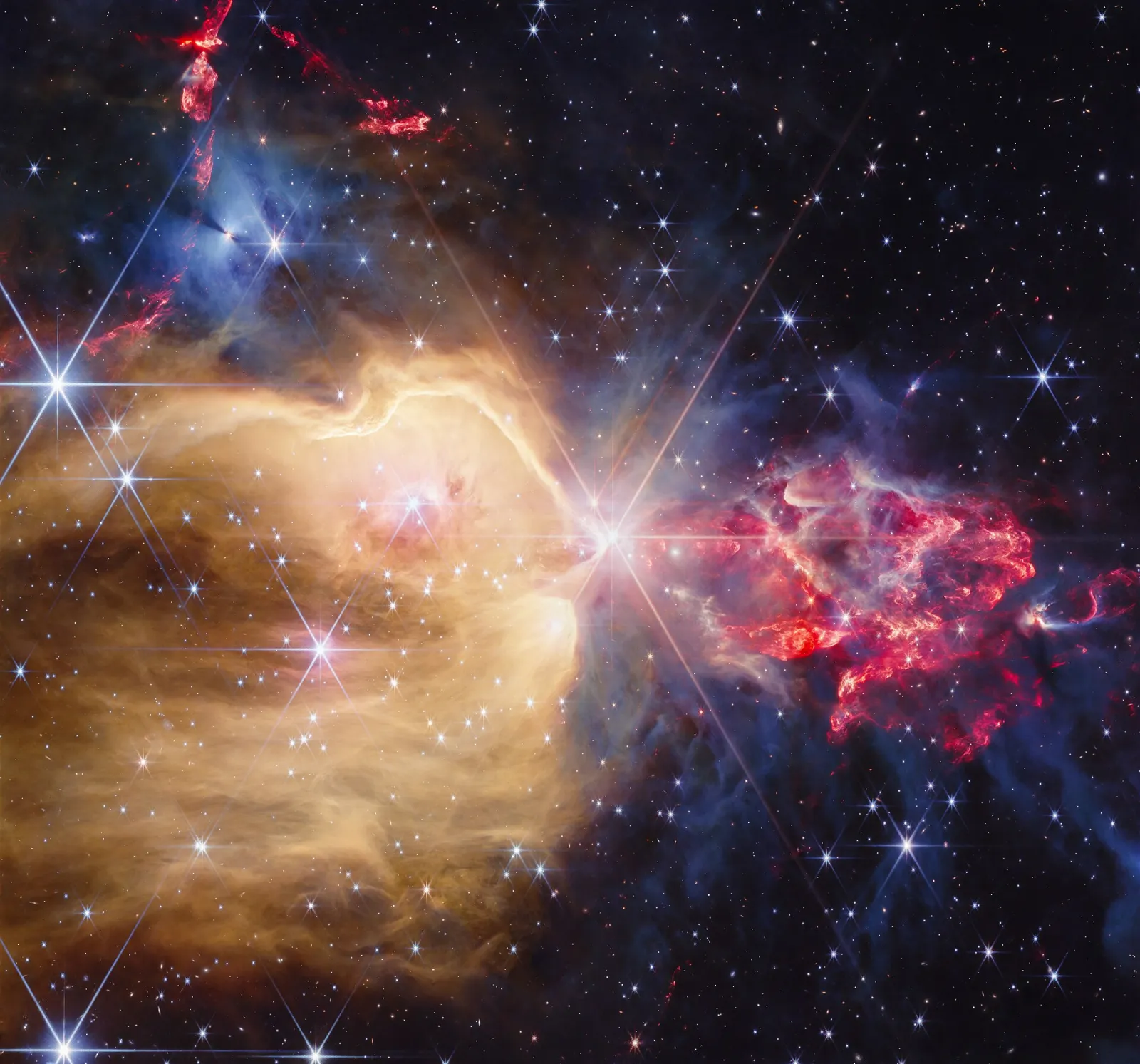
NASA's James Webb Telescope has released new images of the NGC 7129 star cluster.
This star cluster is located approximately 3,300 light-years from Earth.
The images show many new stars that were previously hidden behind clouds of dust.
What's New?
NASA's James Webb Telescope has released new images and views of star formation in the NGC 7129 star cluster.
Why This Matters
This discovery will help scientists obtain accurate information regarding the life cycle of stars and the process of the universe's creation.
Background and Context
The James Webb Telescope has previously collected clear images of various distant galaxies and nebulae in space.
For APSC and Exams
Current fact: The NGC 7129 star cluster is located approximately 3,300 light-years from Earth.
This information has been confirmed by reports from NASA's primary source.
1 saved sources · confidence 100/100 · novelty 90/100